
From Quantum 1.0 to Quantum 2.0
The first quantum revolution (1900–1970s) gave us:
- Transistors (1947)
- Lasers (1960)
- Integrated circuits
- MRI
- GPS timing
These technologies form ~30–35% of global GDP infrastructure today.
But they used quantum mechanics indirectly.
The second revolution — Quantum 2.0 — uses quantum states directly as computational resources.
The shift began with a simple but powerful observation:
Classical computers struggle to simulate quantum systems efficiently.
1. Feynman’s Challenge (1981)
In 1981, Richard Feynman argued:
Simulating quantum systems on classical machines requires resources that scale exponentially.
A quantum system with 50 interacting particles requires storing amplitudes (~1 petabyte).
His proposal:
“Build computers governed by quantum mechanics“.
This was the birth of quantum computing as a concept.
📊 Why Classical Simulation Fails
| Qubits Simulated | Classical Memory Required |
|---|---|
| 30 | ~8 GB |
| 40 | ~8 TB |
| 50 | ~8 PB |
| 300 | Impossible (more states than atoms in universe) |
2. Deutsch’s Universal Quantum Computer (1985)
David Deutsch formalized the idea:
- Introduced quantum Turing machine
- Defined universal quantum computation
- Introduced quantum parallelism
This transformed a physics curiosity into a computational model.
3. The Algorithm Shock — Shor & Grover (1994–1996)
Shor’s Algorithm (1994)
Peter Shor showed:
Large integer factorization could be solved in polynomial time.
Classical factoring complexity:Quantum factoring complexity:Implication:
RSA encryption becomes vulnerable.
RSA-2048 would require:
- ~20 million noisy qubits (early estimates)
- Newer research suggests <1 million high-quality qubits may suffice
NIST (2024) finalized Post-Quantum Cryptography standards and recommends migration by 2030–2035.
Grover’s Algorithm (1996)
Provides quadratic speedup:Relevant to:
- Optimization
- Database search
- AI model training acceleration
- Portfolio optimization
- Logistics
📊 Algorithm Impact Summary
| Algorithm | Advantage | Industry Impact |
|---|---|---|
| Shor | Exponential speedup | Cryptography, cybersecurity |
| Grover | Quadratic speedup | Search, AI, optimization |
| Quantum Simulation | Native modeling | Pharma, materials, energy |
4. First Experimental Systems (1998–2015)
Early demonstrations:
- 1998: 2-qubit NMR systems
- 2001: 7-qubit Shor demo (IBM/Stanford)
- 2007: D-Wave 16-qubit annealer
Limitations:
- High error rates
- Low coherence
- Limited scalability
But proof-of-concept became physical reality.
5. The NISQ Era (2016–Present)
John Preskill coined “NISQ” (Noisy Intermediate-Scale Quantum) in 2018.
Characteristics:
- 50–1,000 physical qubits
- High error rates (~10⁻³ to 10⁻²)
- Limited circuit depth
- No full fault tolerance
Major Milestones
IBM Quantum Experience (2016)
Cloud-access quantum hardware opened globally.
Google Sycamore (2019)
53-qubit processor completed a sampling task in 200 seconds.
Classical comparison debated — but milestone symbolic.
IBM Eagle (2021)
127 qubits — crossed 100-qubit threshold.
Quantum Utility (IBM + UC Berkeley, 2023)
Published in Nature — results beyond brute-force classical verification.
Logical Qubits Era (2023–2026)
- Harvard/QuEra: 48 logical qubits
- Google Willow (2024): Below-threshold error correction
- IBM Loon (2025): Fault-tolerant components integrated
- Quantinuum (2026): 94 logical qubits beyond break-even
The shift is now:
From counting qubits → to reducing error rates.
📊 Hardware Evolution
| Era | Focus | Limitation |
|---|---|---|
| 1998–2010 | Proof of concept | Few qubits |
| 2016–2022 | Scale qubits | High noise |
| 2023–2026 | Logical qubits | Decoder speed, yield |
| 2028+ (target) | Fault tolerance | Engineering scale |
6. Platforms Competing
| Platform | Leaders | Strength |
|---|---|---|
| Superconducting | IBM, Google | Fast gates |
| Trapped ions | Quantinuum, IonQ | High fidelity |
| Neutral atoms | QuEra | Scalability |
| Photonic | Xanadu | Room temperature |
| Topological | Microsoft | Theoretical stability |
No single winner yet. Likely coexistence.
7. The Geopolitical & Industrial Push
Quantum is now strategic infrastructure.
United States
National Quantum Initiative (2018)
China
- Micius satellite (2016)
- 7,600 km QKD link
- National quantum labs
Europe
€1B Quantum Flagship program
Quantum funding globally exceeds $40B public + private combined (estimated 2025).
8. The Quantum Security Shift
Threat model: Harvest Now, Decrypt Later (HNDL)
Encrypted data captured today
Decrypted when quantum computers mature
NIST PQC standards (2024):
- ML-KEM
- ML-DSA
- SLH-DSA
Migration timelines:
- Deprecate RSA-2048 by 2030
- Disallow by 2035
This impacts:
- Banking
- Healthcare
- Defense
- Cloud providers
- Telecommunications
9. Beyond Computing — The Broader Quantum Stack
Quantum computing is one branch of a larger ecosystem:
| Technology | Application |
|---|---|
| Quantum sensing | GPS-free navigation, oil exploration |
| Quantum clocks | Financial timestamp precision |
| Quantum networks | Tamper-proof communication |
| Quantum materials | Superconductivity, energy systems |
Where This Story Goes Next
We now stand at a transition:
From:
- Physical qubits
To: - Logical qubits
To: - Fault-tolerant systems
The next frontier connects quantum systems with:
- HPC supercomputers
- AI acceleration pipelines
- Hybrid classical-quantum workflows
- Industry-specific optimization stacks
- Secure cryptographic migration strategies
In the next articles, we will explore:
- Quantum algorithms mapped to real industry use cases
- Hybrid HPC + AI + Quantum architectures
- Sector-specific adoption pathways
- Strategic roadmaps for C-suite leaders
The physics is settled.
The engineering is accelerating.
The strategic decisions now belong to industry leaders.
IBM’s 127-qubit Eagle processor
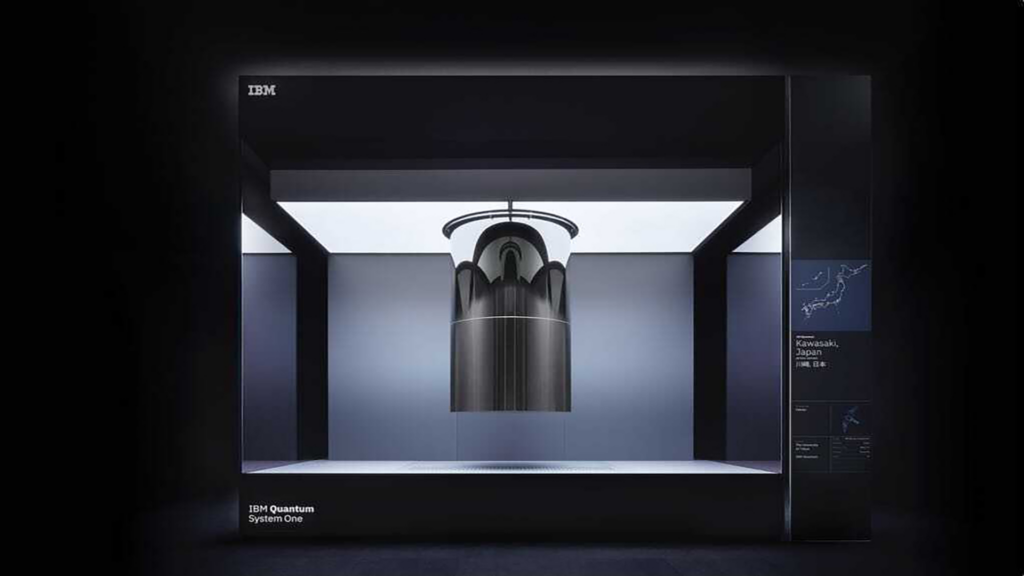
Image: IBM’s 127-qubit Eagle processor — marking the transition beyond 100 qubits
References
- Feynman, R. (1982). Simulating Physics with Computers
- Deutsch, D. (1985). Quantum Theory, the Church–Turing Principle
- Shor, P. (1994). Algorithms for Quantum Computation: Discrete Log and Factoring
- Grover, L. (1996). A Fast Quantum Mechanical Algorithm for Database Search
- Preskill, J. (2018). Quantum Computing in the NISQ era
- IBM Quantum Roadmap (2023–2025)
- Nature (2023). Evidence for Quantum Utility
- NIST Post-Quantum Cryptography Standards (2024)
- National Quantum Initiative Act (2018)
- Google AI Quantum Blog (2019–2025)